
Fitting In in an Unwelcoming Community: A Pragmatic and Value-based Case for Extending The Right to Vote to Permanent Residents in South Africa
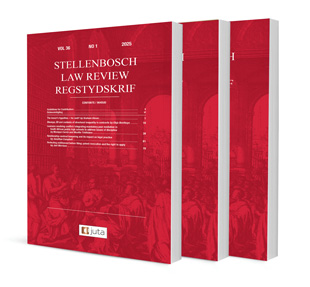
Fitting In in an Unwelcoming Community: A Pragmatic and Value-based Case for Extending The Right to Vote to Permanent Residents in South Africa

Author: Lindo Hadebe

ISSN: 1996-2193
Affiliations: LLB LLM LLM, Researcher at SAIFAC, a centre of the University of Johannesburg
Source: Stellenbosch Law Review, Volume 36 Issue 3, 2025, p. 373-400
https://doi.org/10.47348/SLR/2025/i3a1

Abstract

In South Africa, permanent residents and other categories of non-citizens experience marginalisation and discrimination as a result of their non-citizen status, which is most pronounced by their exclusion from the franchise. The exclusion of permanent residents from suffrage is particularly curious, given their enormous contributions to the social and economic spheres of South African society, which are on par with and in some instances exceed those of citizens. Moreover, the exclusion of permanent residents is unjustifiable in the context of South Africa’s constitutional framework, founded on the values of dignity and equality. Using arguments based on political philosophy, this contribution will show that to exclusively attach political membership to citizenship is no longer fit for purpose, given the indistinguishable role that permanent residents play in the body politic compared to citizens. The contribution will thereafter show how the exclusion of permanent residents amounts to unfair discrimination under the test developed in Harksen v Lane. The legal assessment will reveal that the irrational exclusion of permanent residents from the right to vote is an unjustifiable harm to their dignity and equality. The contribution will suggest a constitutionally accommodative approach to interpret section 19 of the Constitution that can extend the right to vote to permanent residents, thereby mitigating the unjustifiable harm caused by their current exclusion.

The Turning of the Tide: Has Section 14(5)(a) of the Integrated Coastal Management Act, Quite Littorally, Reshaped The Shoreline of Coastal Landownership?

The Turning of the Tide: Has Section 14(5)(a) of the Integrated Coastal Management Act, Quite Littorally, Reshaped The Shoreline of Coastal Landownership?

Authors: Xavier Rebelo & Tracy-Lynn Field

ISSN: 1996-2193
Affiliations: LLB LLM PhD, Post-doctoral Fellow, University of the Witwatersrand; BMus BProc HDipEd LLB LLM PhD, Professor of Law, Claude Leon Chair in Earth Justice and Stewardship, University of the Witwatersrand
Source: Stellenbosch Law Review, Volume 36 Issue 3, 2025, p. 401-428
https://doi.org/10.47348/SLR/2025/i3a2

Abstract

The Integrated Coastal Management Act 24 of 2008 introduces various innovative provisions designed to enhance equitable access to South Africa’s coastal resources. One such provision is section 14(5)(a), which seeks to regulate the interplay between public and private property at the shoreline in the context of a dynamic high-water mark (“HWM”). Section 14(5)(a) alters the pre-existing common law principles governing the effects of movements of the HWM on coastal land units, particularly land units known as agri limitati. However, the language of section 14(5)(a) is open to differing interpretations, obfuscating its practical value and transformative effect. Through a purposive and contextual reading of section 14(5)(a), informed by the approach to statutory interpretation elaborated in Natal Joint Municipal Pension Fund v Endumeni Municipality 2012 (4) SA 593 (SCA), this contribution endeavours to investigate whether section 14(5)(a) has the effect of converting affected coastal land units to agri non limitati. We argue that, if correctly interpreted, section 14(5)(a) signals the legislative dissolution of agri limitati and the emergence of a novel category of coastal land units in South African law, provisionally termed “agri how limitati”. The resolution of the exact legal status of this novel class of coastal land units and its effect on the long-established common law principles governing the effects of movements of the HWM on coastal land units – whether through judicial interpretation or legislative intervention – may reshape the future of littoral landownership in South Africa.

Disproportional Pay Differentials: Prohibition in the Employment Equity Act and Thoughts on The Evidentiary Burden

Disproportional Pay Differentials: Prohibition in the Employment Equity Act and Thoughts on The Evidentiary Burden

Authors: Albertus Liebenberg, Graham S Giles, Michelle Jäckel-Visser & Callie C Theron

ISSN: 1996-2193
Affiliations: MCom (Industrial Psychology), Remuneration Consultant 21st Century; BA (Law) LLB, Practising Attorney & Notary, High Court of South Africa, Part-time Lecturer, Stellenbosch University; PhD (Industrial Psychology), Senior Lecturer, Department of Industrial Psychology, Stellenbosch University; DPhil (Industrial Psychology), Emeritus Professor, Department of Industrial Psychology, Stellenbosch University
Source: Stellenbosch Law Review, Volume 36 Issue 3, 2025, p. 429-456
https://doi.org/10.47348/SLR/2025/i3a3

Abstract

The Employment Equity Act (“EEA”) requires South African designated employers to extend their commitment towards fair remuneration practices beyond the internationally principled standard of equal pay for work of equal value. Designated employers are also required to eliminate disproportional pay differentials among the currently prescribed six occupational levels. This raises the question of how the construct “disproportional pay” or, more correctly, “pay differentials” should be interpreted and applied to ensure all disproportionality in pay differentials is eliminated. The EEA and its accompanying regulations and forms fall short in providing a clear conceptualisation or operationalisation of the construct. In this contribution, we consider how the construct “disproportional pay differentials” should be conceptualised and operationalised to equip the National Minimum Wage Commission (“NMWC”), which monitors pay differentials, with appropriate and clear guidelines on what constitutes proportional pay differentials. We use these definitions and operationalisations to propose regression analysis methods and hypothesis tests that may be applied to individual employee remuneration data sets to measure an organisation’s degree of compliance with the principle of proportional pay differentials. Additional measures are proposed to identify outlier employees that can be considered to be prima facie evidence of individual pay discrimination based on arbitrary grounds that are unconstitutional, unlawful and unfair. Ultimately, a framework is proposed that the NMWC can use and build on to develop standards of adherence to the principle of proportional pay differentials.

The Devil’s in The Detail – Some Observations and Implications for Implementation of The Hate Crime Provisions in The Prevention and Combating of Hate Speech and Hate Crimes Act 16 of 2023

The Devil’s in The Detail – Some Observations and Implications for Implementation of The Hate Crime Provisions in The Prevention and Combating of Hate Speech and Hate Crimes Act 16 of 2023

Author: Kamban Naidoo

ISSN: 1996-2193
Affiliations: BA LLB LLM LLD, Associate Professor, Department of Criminal & Procedural Law, University of South Africa
Source: Stellenbosch Law Review, Volume 36 Issue 3, 2025, p. 457-480
https://doi.org/10.47348/SLR/2025/i3a4

Abstract

The presidential signing of South Africa’s Prevention and Combating of Hate Speech and Hate Crimes Act 16 of 2023 in May 2024 marked the end of more than a decade of delays and uncertainty. This contribution examines some of the positive and challenging aspects of the hate crime provisions in the Act. The new law is commendable for its recognition of a wide range of victim characteristics. However, the hate crimes provisions will place an onerous burden on the South African Police Service (“SAPS”) and the National Prosecution Authority (“NPA”). As first responders, investigating officers tasked with investigating hate crimes will be required to incorporate evidence of bias into their initial statements. Furthermore, to secure convictions, prosecutors will have to prove the perpetrator’s biased motivation beyond a reasonable doubt. It is uncertain whether the police and prosecutors are currently equipped for these tasks. Further training and education will be essential for these role players to fulfil their obligations in terms of the new Act as per sections 7(1)(b)(i) and 7(2)(b)(i), which call for the training of members of SAPS and the NPA, respectively. This contribution considers these training requirements by referring to best international practices from foreign jurisdictions that enacted hate crime legislation and where police and prosecutors have undergone the requisite education and training to investigate and prosecute hate crimes. Some consideration will also be given to the victim characteristics identified in the Act, the classification of the Act in terms of existing hate crime law models and the sentencing or penalty provisions. The recommendations will also consider public awareness and educational campaigns, and the development of multidisciplinary hate crime courses at South African universities.

Reflecting on 30 Years of Class Action in South Africa: A People Inured to Hardship but Not to Collective Redress?

Reflecting on 30 Years of Class Action in South Africa: A People Inured to Hardship but Not to Collective Redress?

Author: Theo Broodryk

ISSN: 1996-2193
Affiliations: BA LLB LLD (Stell), Professor of Law and Head: Law Clinic, Stellenbosch University
Source: Stellenbosch Law Review, Volume 36 Issue 3, 2025, p. 481-500
https://doi.org/10.47348/SLR/2025/i3a5

Abstract

This contribution examines the underutilisation of class action litigation in South Africa over the past 30 years. Despite having a constitutional foundation for class actions since 1993, South Africa has seen remarkably few cases – only 21 certification judgments in three decades, with a success rate of just 45%. The article highlights this disparity through international examples like the iPhone “Batterygate” scandal and the Roundup herbicide litigation, which prompted extensive class action lawsuits and substantial settlements in the United States of America and Canada, while generating no similar litigation in South Africa despite widespread product use. The contribution identifies several key barriers to class action utilisation: the absence of comprehensive legislation governing the procedure, stringent certification thresholds that require establishing a triable cause of action, a shortage of specialised practitioners, an underdeveloped litigation funding market, cultural perceptions of futility among marginalised communities, and the “negative value suit” problem, where individual recoveries may be less than participation costs. The author argues that increased class action usage is crucial for South Africa because these mechanisms enhance judicial efficiency, promote access to justice for economically disadvantaged groups, ensure consistent outcomes, provide deterrent effects against corporate misconduct, and can catalyse broader social and regulatory reforms. The author, furthermore, expresses optimism on a gradual transformation in the South African collective redress landscape, founded on recent developments, including new certification rules being incorporated into the Uniform Rules of Court, growing legal awareness, and an unprecedented number of pending class actions involving mining health damages, product liability, environmental disasters, and consumer fraud. It is concluded that class actions are poised to play a significantly greater role in South African law, offering opportunities to transform abstract rights into practical remedies and empower citizens to seek collective justice against systemic harms.

Privacy For Sale? The Legality of the Pay-or-Consent Model in South Africa

Privacy For Sale? The Legality of the Pay-or-Consent Model in South Africa

Author: Zinhle Novazi

ISSN: 1996-2193
Affiliations: BSoc LLB (UCT) LLM (WITS) LLM (QMUL), Lecturer, Stellenbosch University
Source: Stellenbosch Law Review, Volume 36 Issue 3, 2025, p. 501-539
https://doi.org/10.47348/SLR/2025/i3a6

Abstract

This contribution investigates the legality of the pay-or-consent model, also known as the pay-or-okay model, in which users must either pay a subscription fee or consent to potentially invasive personal data processing to access an online service, within the framework of South African law. With reference to Meta Platforms’ 2023 implementation of this model on Facebook, this contribution explores whether such practices comply with the Protection of Personal Information Act 4 of 2013 (“POPIA”), the Consumer Protection Act 68 of 2008 (“CPA”), South African common law and competition law. Drawing comparative insights from European Union law, including the General Data Protection Regulation (“GDPR”), the Court of Justice of the European Union (“CJEU”)’s decision in Meta Platforms v Bundeskartellamt, and the European Data Protection Board’s Opinion 08/2024 on Consent in the Context of Consent or Pay Models Implemented by Large Online Platforms, the contribution examines how power asymmetries, lack of meaningful alternatives, and bundled consent undermine the voluntariness of consent under both data protection and consumer frameworks. The analysis unfolds across four key dimensions: (1) the data protection requirement that consent must be voluntary, granular, and informed; (2) the commodification of personal data and potential abuse of dominance under South African competition law; (3) the failure of South African contract law and public policy doctrine to sufficiently address structural coercion and substantive unfairness in digital contracts; and (4) the CPA’s role in regulating procedural and substantive unfairness in platform-consumer relationships. The article argues that existing South African law lacks the doctrinal clarity and institutional capacity to regulate consent-based digital business models effectively. It concludes that absent legislative reform or purposive judicial intervention, the pay-or-consent model risks entrenching digital inequality and commodifying privacy. The article calls for a normative shift in South African legal doctrine, particularly in contract, consumer, and data protection law, to prioritise substantive fairness and user autonomy in the face of increasing platform dominance.