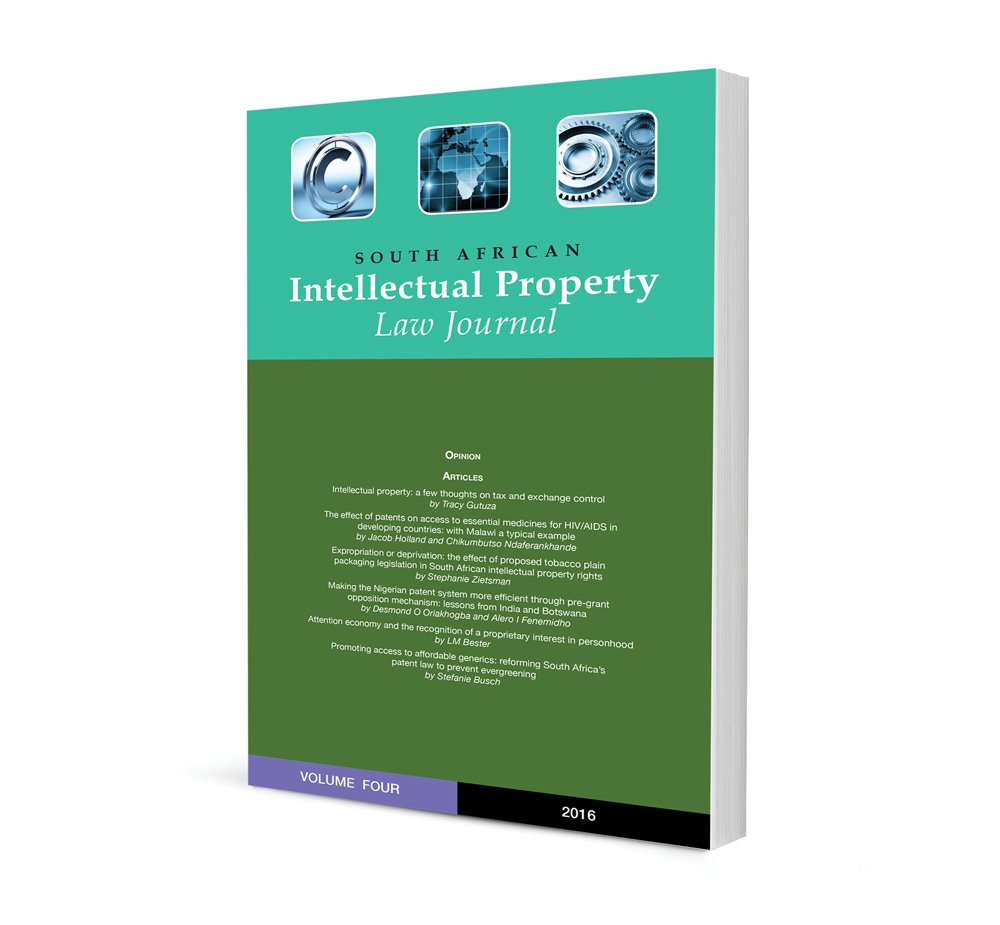
The Constitutional Court of Justice Moseneke and the Decolonisation of Law in South Africa: Revisiting the Relationship Between Indigenous Law and Common Law

The Constitutional Court of Justice Moseneke and the Decolonisation of Law in South Africa: Revisiting the Relationship Between Indigenous Law and Common Law

Authors Chuma Himonga

ISSN: 1996-2088
Affiliations: Professor of Law and DST/NRF Chair in Customary Law, Indigenous Values and Human Rights at the University of Cape Town
Source: Acta Juridica, 2017, p. 101 – 123

Abstract

This paper is written to honour Justice Dikgang Moseneke for his roles in recent South African legal history – as a member of the technical committee that drafted the interim Constitution of the Republic of South Africa in 1993, a member of the Constitutional Court from 2002 to May 2016 and as Deputy Chief Justice of South Africa, among others. The paper focuses on the decisions of the Constitutional Court during his time in this court concerning the relationship between indigenous law and common law in a broad sense (ie South African law of European origin, including Roman-Dutch law and legislation). Taking constitutional legal pluralism as a point of departure, the paper examines the equal treatment of indigenous law and common law in state law and institutions against the backdrop of the demands for the decolonisation of the law spurred on by the student protests in South Africa in 2015 and 2016. The paper argues that the Constitutional Court has endorsed the constitutionally guaranteed legal pluralism that recognises the equality of indigenous law and common law, and it has thereby contributed to the decolonisation of the law. However, some of its pronouncements have served to cast a shadow of ambiguity and contradiction rather than shedding light on the relationship between the two components of South African law under consideration. This shadow requires revisiting in the face of demands for decolonisation. The paper also argues that the court’s shadow has placed indigenous law in a vulnerable position, open to being obliterated by the Constitutional Court itself and by the other courts. This means that the dominance of common law in the legal system – as was the case during the colonial and apartheid eras – may continue to characterise the national legal system. Thus, the issue of the court’s shadow is not merely academic, but has broader implications for the decolonisation of law.
Deputy Chief Justice Moseneke’s Approach to the Separation of Powers in South Africa

Deputy Chief Justice Moseneke’s Approach to the Separation of Powers in South Africa

Authors Mtendeweka Mhango, Ntombizozuko Dyani-Mhango

ISSN: 1996-2088
Affiliations: Adjunct Professor, Nelson Mandela School of Law, University of Fort Hare; Associate Professor, School of Law, University of the Witwatersrand, Johannesburg
Source: Acta Juridica, 2017, p. 75 – 98

Abstract

This paper is premised on the proposition that there is a need for the development of a separation of principle, which incorporates a lucid political question doctrine that will assist the country to dispose of political questions that come to the courts for adjudication. In this regard, we address two things: firstly, we examine Moseneke DCJ’s jurisprudence on separation of powers in two specific and related cases in International Trade Administration Commission v SCAW South Africa, and National Treasury v Opposition to Urban Tolling Alliance, where he penned majority opinions. These cases are related because Moseneke DCJ builds on the theme of the separation of powers that he pronounced in International Trade Administration Commission v SCAW South Africa, when he resolved the issue in National Treasury v Opposition to Urban Tolling Alliance. In examining this jurisprudence, we are critical of Moseneke DCJ’s failure to contribute to the development of a coherent political question doctrine for South Africa, which defines the scope and contours for judicial authority, and for being unable to provide cogent reasons in some of his academic commentaries against the application of such principle of restraint.

Law as Justification: Glenister, Separation of Powers and the Rule of Law

Law as Justification: Glenister, Separation of Powers and the Rule of Law

Authors Cathleen Powell

ISSN: 1996-2088
Affiliations: Associate Professor, Department of Public Law, UCT Law Faculty
Source: Acta Juridica, 2017, p. 55 – 74

Abstract

This article analyses the majority and minority judgments in Glenister through the lens of the doctrine of separation of powers. This is not an aspect that the majority judgment addresses explicitly, and, as a result, the minority’s objection that the majority violated this doctrine, acting outside of its powers and intruding on the exclusively ‘political’ domain of the other two branches, appears to be unanswered. Drawing on the legal philosophy of Lon L. Fuller, this article explores the idea that the rule of law requires an ongoing dialogue between all branches of government, in which all branches justify their exercise of power under law. Such a conception of the rule of law requires a more fluid, porous relationship between the branches, and does not admit of exclusive domains for either law or politics. The majority and minority judgments in Glenister are discussed as examples of the rule-of-law based and traditional conceptions of the doctrine of separation of powers respectively. Understood in terms of Fuller’s rule of law theory, the majority judgment in Glenister did not violate the doctrine of separation of powers, but instead helped to uphold a constitutionally functional relationship between all three branches of government.

Fundamental Procedural Rights of Civil Litigants in Australia and South Africa: is There Cause For Concern? (Part 1)

Fundamental Procedural Rights of Civil Litigants in Australia and South Africa: is There Cause For Concern? (Part 1)

Authors Wouter Le R de Vos, Theo Broodryk

ISSN: 1996-2207
Affiliations: Associate Professor of Law, Curtin University, Western Australia; Visiting Professor, University of Johannesburg; Senior Lecturer and Manager: Legal Aid Clinic, University of Stellenbosch
Source: Tydskrif vir die Suid-Afrikaanse Reg, Issue 3, 2019, p. 425 – 449

Abstract

None

Foreword

Foreword

Authors Dr Theo Broodryk

ISSN: 1996-2193
Affiliations: Head: Stellenbosch University Law Clinic
Source: Stellenbosch Law Review, Volume 30 Issue 1, 2019, p. 3 – 4

Abstract

None

The Prohibition of Terrorism as a Jus Cogens Norm

The Prohibition of Terrorism as a Jus Cogens Norm

Authors Aniel de Beer, Dire Tladi

ISSN: 2521-2583
Affiliations: Research Associate: South African Research Chair in International Law, University of Johannesburg; Professor of International Law, University of Pretoria
Source: South African Yearbook of International Law, 2017, p. 1 – 41

Abstract

In the years after 9/11, various resolutions of the United Nations General Assembly and the United Nations Security Council have condemned terrorism as a flagrant violation of international law and a grave threat to international peace and security. Furthermore, terrorist acts have been declared as unjustifiable regardless of the reasons invoked by its perpetrators. In light of the universal condemnation of terrorism, the question arises whether the prohibition of terrorism has attained the status of a peremptory norm of international law (jus cogens). This article analyses the criteria for jus cogens norms as set out in article 53 of the Vienna Convention on the Law of Treaties as well as the characteristics of jus cogens norms as have emerged under international law. It then considers whether the prohibition of terrorism meets the criteria for jus cogens norms, and in addition to this, whether it possesses the characteristics of jus cogens norms. Finally, it evaluates whether the prohibition of terrorism has attained the status of a jus cogens norm.

Racism in the Workplace: A View From the Jurisprudence of Courts in the Past Decade

Racism in the Workplace: A View From the Jurisprudence of Courts in the Past Decade

Authors Bongani Khumalo

ISSN: 1996-2185
Affiliations: Lecturer, Department of Mercantile Law, University of South Africa
Source: South African Mercantile Law Journal, Volume 30 Issue 3, 2018, p. 377 – 394

Abstract

South Africa is an intensely wounded society with more than 343 years of racist colonial and apartheid rule that has negatively affected society and workplace relations. This article highlights and exposes the continued prevalence of racism in the South African workplace. The constitutional and legislative framework, specifically, provisions from the Employment Equity Act 55 of 1998 and the Promotion of Equality and Prevention of Unfair Discrimination Act 4 of 2000, which are pertinent to this issue, are briefly discussed. The article presents a reflective glance at case law from 2007 to 2017 where the courts had to grapple with the issue of workplace racism. A picture emerges from this holistic view of the courts’ approach that there is no place for racists in South African society, and that employers should adopt a firm stance when dealing with cases involving racism. This article argues in favour of adopting an unconventional approach that advocates mechanisms to deal with workplace racism remedially and punitively which is proportional to its social and legal unpleasantness. Such an approach would encourage an open conversation about the issue of race in the workplace and would contribute towards rooting out racism.

Special Issue on Transformation and the Courts: Introduction

Special Issue on Transformation and the Courts: Introduction

Authors Cathi Albertyn, Muriel Mushariwa

ISSN: 1996-2126
Affiliations: Professor, School of Law, University of the Witwatersrand; Senior Lecturer, School of Law, University of the Witwatersrand
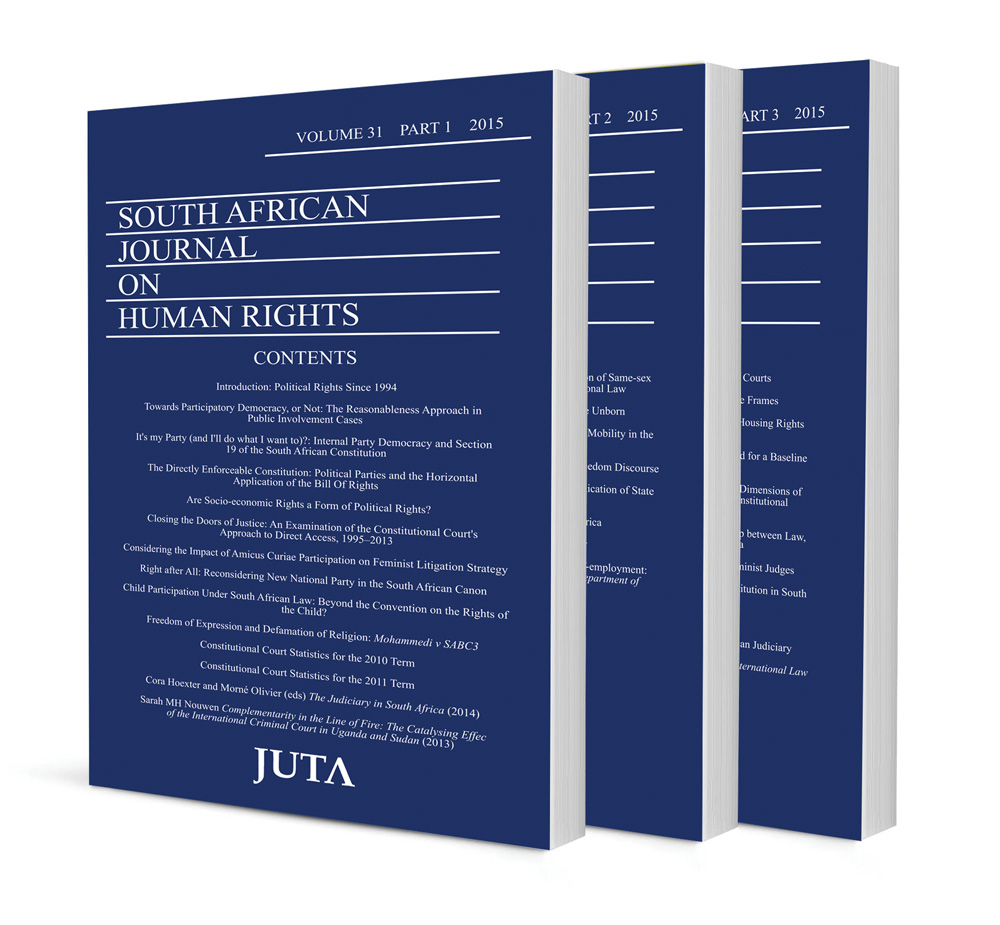
Source: South African Journal on Human Rights, Volume 31 Issue 3, 2015, p. 441 – 445

Abstract

None

Using the South African Law of Trusts to Predict Some Features of the Nascent South African Public Trust Doctrine

Using the South African Law of Trusts to Predict Some Features of the Nascent South African Public Trust Doctrine

Authors Andrew Muir

ISSN: 2616-8499
Affiliations: None
Source: South African Journal of Environmental Law and Policy 2017, p. 5 – 30

Abstract

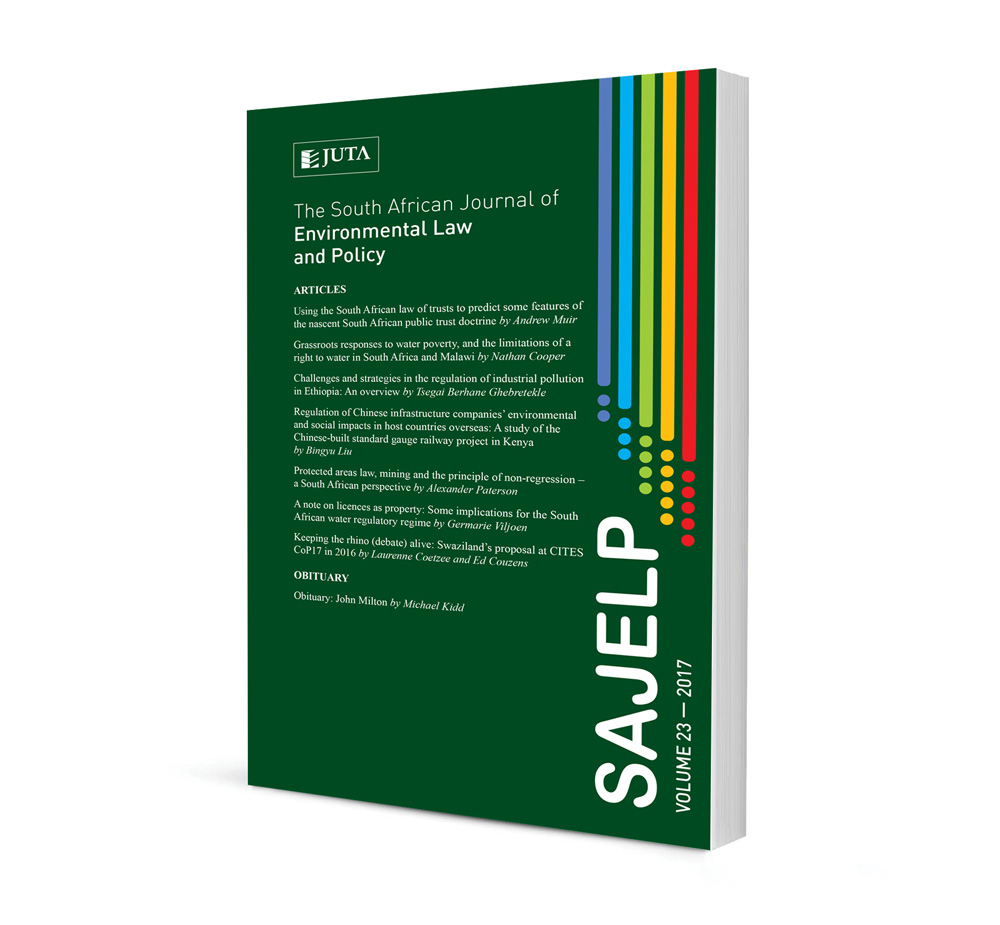
South African courts have evolved a foreign legal idea, the English private trust, in accordance with South African legal principles. In doing so, South African common law has been developed to give substance to the English idea of the trust. This has occurred despite the fundamental incompatibility of the two countries’ respective property law regimes which underpin the common law. Unlike the English trust, South African trusts are not based on dual real ownership rights but on contractual personal rights amounting to a personal beneficial interest. The statutory introduction of the South African Public Trust Doctrine (the SAPTD) has similarities with the introduction of the idea of the English trust into South African law. The Anglo-American Doctrine of Public Trust is regarded as a starting point or benchmark against which the SAPTD can be measured. Both the Doctrine of Public Trust and English private trusts are rooted in English law and are premised on dual ownership rights. This article asks certain questions about the nascent SAPTD and uses the similarities in origins between the Doctrine of Public Trust and English private trust law and the latter’s evolution within a South African context to provide possible answers to these questions. In doing so, the South African private trust law is used to predict some likely features of the SAPTD.

Intellectual Property as Real Security

Intellectual Property as Real Security

Authors Sadulla Karjiker

ISSN: 2521-2591
Affiliations: Anton Mostert Chair of Intellectual Property Law, Faculty of Law, Stellenbosch University
Source: South African Intellectual Property Law Journal, 2018, p. 1 – 23

Abstract

None