A comparative study of the scope of jurisdiction of the investment and securities tribunal of Nigeria: Matters arising

A comparative study of the scope of jurisdiction of the investment and securities tribunal of Nigeria: Matters arising

Authors Dr Eric Okojie, LE Enakemere, Peace Folorunsho

ISSN: 2521-2605
Affiliations: Senior Lecturer, Business Law Department, Faculty of Law, University of Benin, Benin City, Nigeria; Abuja, FCT-based legal practitioner; Solicitor/barrister of the Supreme Court of Nigeria
Source: Journal of Comparative Law in Africa, Volume 4 Issue 2, p. 105 – 129

Abstract

The jurisdiction of the Investment and Securities Tribunal as a court of first instance to the exclusion of regular courts in matters pertaining to the capital market has generated debate within the legal community because of Nigeria’s previous history with ouster clauses under military rule. This is more so when the independence of the tribunal is subject to question due to the wide powers conferred on the Finance Minister in Nigeria in the appointment of the chairman of the tribunal, for example, active legal practice is not an obligatory criterion for legal practitioners who may be considered for membership of the tribunal as only their experience in the capital market matters. Adjudication by the tribunal is preferred by some aggrieved because unlike the regular courts it is not burdened by technicalities, arbitration is swift and just like the regular courts, an aggrieved has a right of appeal. Despite these features, agitation for the removal of the exclusive jurisdiction has continued to heighten. This paper argues that there is a need for the review of the provisions of the enabling Act on membership of the tribunal; particularly for legal practitioners by requiring that such a member must be in active legal practice prior to his appointment as a means of assuaging the frequent appeals on the grounds of lack of fair hearing at the appellate courts. There is also the need for the public, key investors in the capital market about the activities of the tribunal as an alternative means of judicial redress. It concludes with the position that various securities tribunals/regulatory bodies must be manned with persons of expertise knowledge and technical know-how. This would ensure that securities tribunals are efficient, strong, transparent and responsive to the investors in the capital market.

Child marriage, bridewealth and legal pluralism in Africa

Child marriage, bridewealth and legal pluralism in Africa

Authors Jane C. Diala, Anthony C. Diala

ISSN: 2521-2605
Affiliations: None; Postdoctoral Fellow, Centre for Comparative Law in Africa, University of Cape Town
Source: Journal of Comparative Law in Africa, Volume 4 Issue 2, p. 77 – 104

Abstract

As a widespread practice, child marriage has defied legislation in most sub- Saharan African countries. Is there a link between this defiance and distortions of the meaning of bridewealth? In its original sense, bridewealth functioned as the legitimating sign of marriage, a pledge that the bride will be well treated and a figurative recognition of her fecundity and worth to her community. Today, economic stratification and other socio-economic changes have commercialised bridewealth payment. This article draws a causal link between the distortion of bridewealth payment and the persistence of child marriage in Africa. Arguably, this persistence questions the influence of State law on normative behaviour in social fields. The article locates this argument in the disconnection between State law and people’s cultural practices, a notable feature of legal pluralism in post-colonial societies. While legislation remains important in campaigns against child marriage, policy makers should be mindful of its limitations in the face of customary law and socio-economic realities. Accordingly, anti-child marriage campaigns should aim to educate role players in child marriage and, generally, recognise the close link between early marriage, high bridewealth and normative interaction.

An examination of the power of removal of secretaries of private companies in Nigeria

An examination of the power of removal of secretaries of private companies in Nigeria

Authors Andrew Ejovwo Abuza

ISSN: 2521-2605
Affiliations: Lecturer and former Sub-Dean, Faculty of Law, Delta State University, Abraka (Oleh Campus), Nigeria, Legal consultant and Principal of the law firm of Abuza and Associates
Source: Journal of Comparative Law in Africa, Volume 4 Issue 2, p. 34 – 76

Abstract

The Nigerian Companies and Allied Matters Act (CAMA) 2004 came into force on 2 January 1990. It provides the procedure for the removal of secretaries of public companies for alleged misconduct by the directors of public companies which said procedure accords them an opportunity to defend themselves before they can be removed for alleged misconduct. Thus, the employment of secretaries of public companies is protected by statute in Nigeria. There are, however, no statutory provisions in the CAMA 2004 on the procedure for the removal of secretaries of private companies for alleged misconduct by directors of private companies. In short, the Act is silent on the subject. This lacuna is being abused, as some directors of private companies in Nigeria have sought sanctuary under it to remove secretaries of private companies for alleged misconduct without giving them an opportunity to defend themselves. Although, no statutory procedure is in the CAMA 2004 on the removal of secretaries of private companies for alleged misconduct by directors of private companies, this article examines the power of removal of secretaries of private companies for alleged misconduct by directors of private companies in Nigeria and draws an analogy against the backdrop of the provisions of the CAMA 2004 with respect to the removal of secretaries of public companies for alleged misconduct, the provisions of the Constitution of the Federal Republic of Nigeria (CFRN) 1999, the common law rules of natural justice, case law as well as the provisions of International human rights instruments. It is the view of the writer that the removal of secretaries of private companies for alleged misconduct by directors of private companies in Nigeria without giving them an opportunity to defend themselves is discriminatory and contrary to section 36 of the CFRN 1999, the common-law rules of natural justice, international human rights instruments and international best practices. Notwithstanding the fundamental differences between private companies and public companies, the writer suggests, among other things, the amendment of the Act to provide the procedure for the removal of secretaries of private companies for alleged misconduct by directors of private companies which said procedure must accord them an opportunity to defend themselves before they can be removed for alleged misconduct by directors of private companies. This is in line with the ‘equal protection of the law and non-discrimination’ principle as enunciated in section 42(1)(a) and (b) of the CFRN 1999 and international human rights instruments; right to a fair hearing as guaranteed under the common-law rules of natural justice, section 36 of the CFRN 1999 and international human rights instruments; international best practices; and the rule of law.

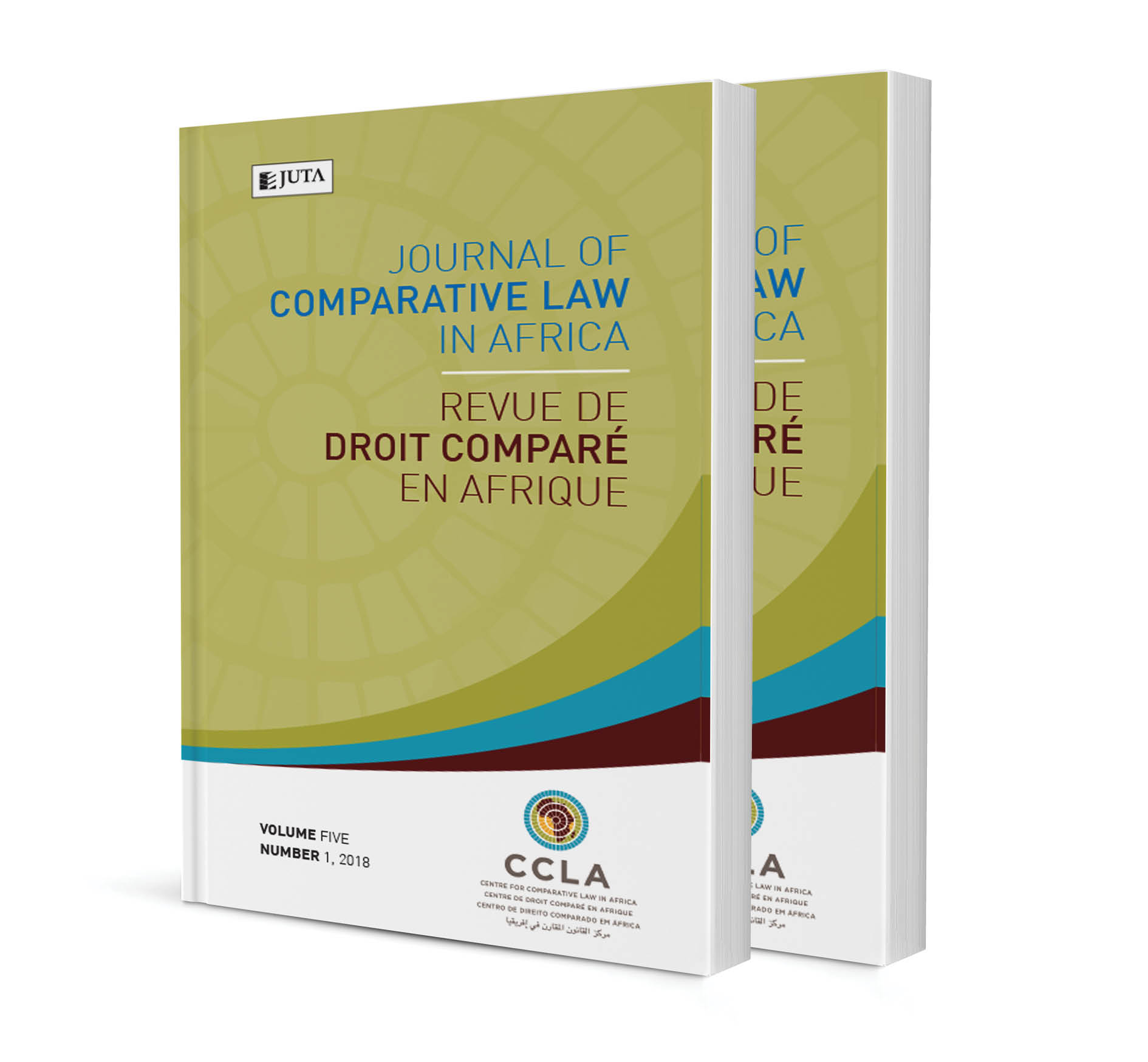
International humanitarian law in the work of regional human rights courts: African and comparative trends

International humanitarian law in the work of regional human rights courts: African and comparative trends

Authors Brian Sang YK

ISSN: 2521-2605
Affiliations: Research Fellow, Centre for Alternative Research on Law and Policy
Source: Journal of Comparative Law in Africa, Volume 4 Issue 2, p. 1 – 33

Abstract

Regional human rights courts have applied human rights law and international humanitarian law (IHL) when considering alleged violations in the context of armed conflict. This offers a useful basis for examining how regional human rights bodies have been or can be used to enforce IHL and how, and the extent to which, human rights and IHL norms interact. But it also poses challenges to the legitimacy and efficacy of regional bodies that apply IHL. This article analyses trends in the application of IHL in regional human rights systems, as reflected in the work of African, Inter-American and European human rights treaty monitoring bodies. Supported by comparative case law, the article argues that regional human rights courts have contributed to the implementation of IHL, albeit to various extents. It also argues that the growing convergence of IHL and human rights norms means that regional mechanisms can be utilised to strengthen compliance with both IHL and human rights law. Yet this is undermined by the lack of systematic engagement with IHL within and across regional human rights systems. To reverse this trend, this article proposes that regional systems must clarify: (a) their competence to directly apply IHL, or only refer to it as an aid in interpreting human rights law; (b) the extent to which IHL can or should influence the interpretation of regional human rights treaties or specific norms; and (c) which body of law or, in the alternative, the specific rule that should prevail in case of a conflict of norms.

Unjustified Enrichment: Should South Africa Venture into the Thick Forest of Passing-on Defence?

Unjustified Enrichment: Should South Africa Venture into the Thick Forest of Passing-on Defence?

Authors Aimite Jorge

ISSN: 2521-2605
Affiliations: Senior lecturer at the University of Namibia, Namibia
Source: Journal of Comparative Law in Africa, Volume 4 Issue 1, p. 145 – 164

Abstract

There is usually a tension in the law of unjustified enrichment when it comes to sanctioning a defence of passing on. The concept ‘passing on’ in the law of unjustified enrichment essentially entails that the claimant has shifted onto a third party the ‘financial’ burden that is consequent upon the defendant’s unjustified enrichment. Several jurisdictions formulate their enrichment doctrine requiring a ‘mirror-image loss-gain’, that is to say, the claimant can only recover from the defendant what he has lost to the defendant. If the claimant were allowed to recover more than his loss, the law would be punishing the defendant and enriching the claimant at the defendant’s expense. For this and other reasons some think that there should exist symmetry in the law of unjustified enrichment in that where the defence of change of position (loss of enrichment) is recognised, the passing-on defence should equally be sanctioned as the reverse face of change-of-position defence on the claimant’s side. This paper explores these issues in depth and argues that the need for such symmetry is misconceived. The defence of passing on is, however, sustainable in certain cases and should be recognised not only for policy reasons but also for reasons of principle.