
Regspraak: No title to prosecute: Grasping at straws or tactical move?

Regspraak: No title to prosecute: Grasping at straws or tactical move?
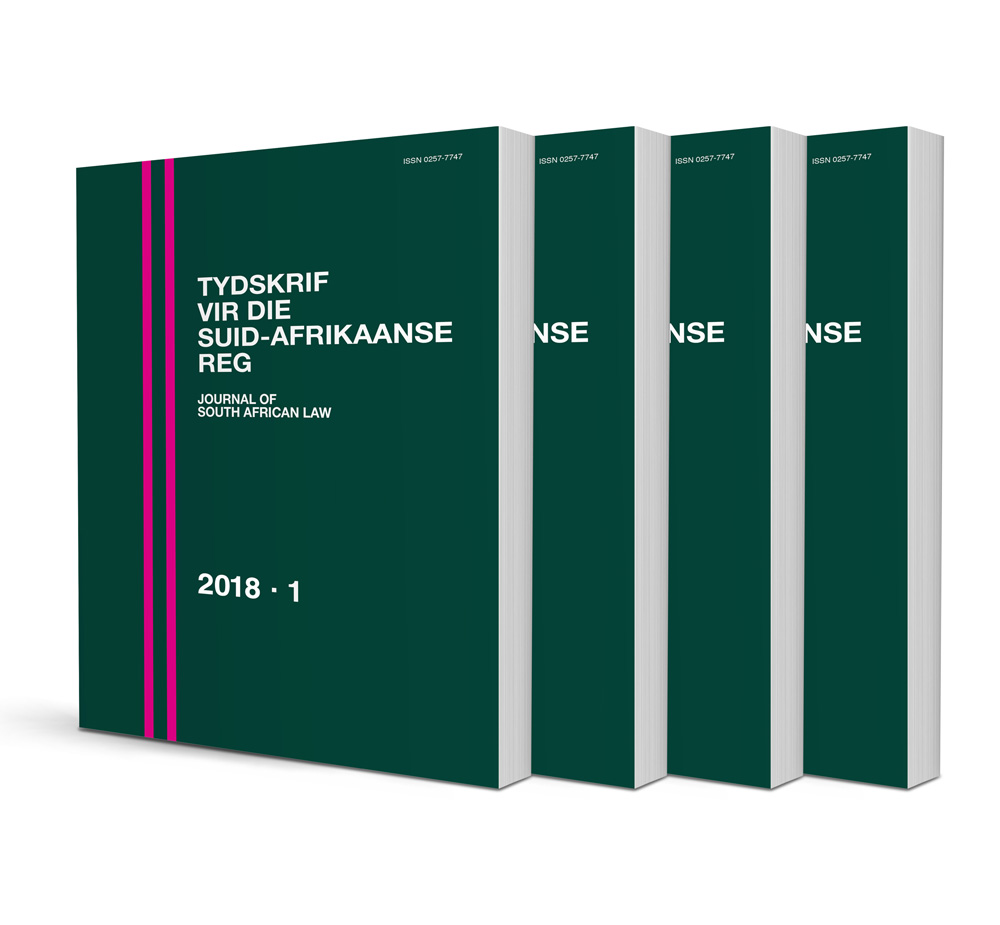
Author: M Watney

ISSN: 1996-2207
Affiliations: University of Johannesburg
Source: Tydskrif vir die Suid-Afrikaanse Reg, Issue 2, 2022, p. 405-417

Abstract

’n Beskuldigde persoon se reg op ’n billike verhoor geniet beskerming in artikel 35 van die handves van regte soos vervat in die Grondwet van die Republiek van Suid-Afrika, 1996. Die grondwet self omskryf die handves van regte as die hoeksteen van demokrasie in die land waarin die demokratiese waardes van menswaardigheid, gelykheid en vryheid bevestig word (a 7(1)). Omvattende werking word aan die handves verleen aangesien artikel 8(1) toepassing vind op die totale reg en bindend is op die wetgewende, uitvoerende en regsprekende gesag en alle staatsorgane. Die konstitusionele hof het in dié verband beklemtoon dat die reg op ’n billike verhoor fokus op die belang van prosedurele billikheid. Overgesetsynde plaas dit die kollig op die optrede van die polisiediens en nasionale vervolgingsgesag asook die toepaslike magtigende wetgewing aan die hand waarvan strafregtelike vervolgings ingestel word. In die twee onlangse beslissings van S v Moussa (2021 2 SASV 378 (GJ)) en S v Zuma (2022 1 All SA 533 (KZP), (CCD 30/2018) 2021 ZAKZPHC 89 (26 Oktober 2021)), het die onderskeie beskuldigdes in ’n poging om hul reg op ’n billike verhoor te beskerm, ’n pleit ingevolge artikel 106(1)(h) van die Strafproseswet 51 van 1977 opgewerp dat die aanklaer nie bevoeg was om te vervolg nie. Die betrokke pleit vorm reeds jare deel van die strafprosesregbedeling in Suid-Afrika en verskyn basies woordeliks dieselfde in opvolgende wetgewing sedert 1903. Desnieteenstaande het dié pleit weinig aandag in gerapporteerde beslissings en bykans geen aftrek in akademiese diskoers gekry nie. Dié gebrek het ruimte gelaat vir die pleit om in die vermelde beslissings enersyds onagsaam aangewend te word, en andersyds as skuiwergat te dien in die ewige spel van klaarblyklike verhoorontduiking. In die Moussa-saak beslis die hof tereg, na ontleding van presies wie oor verhoorbevoegdheid beskik en die rol van die aanklaer as verteenwoordiger van die direkteur van openbare vervolgings, dat die vervolgingsbevoegdheid van ’n aanklaer nie nadelig geraak word deur ’n vorige aanklaer wat haar bevoegdhede oorskry het nie en die pleit word van die hand gewys. In hierdie geval is die verkeerde remedie aangewend en word daar aan die hand gedoen dat die beskuldigde suksesvol sou wees indien die hof genader was met ’n aansoek om die vervolgingsgesag te verplig om die ooreenkoms wat met die beskuldigde gesluit was, gestand te doen asook ’n bevel wat die vervolgingsgesag verbied om die vervolging voort te sit. Die bevoegdheid van ’n aanklaer om te vervolg word in wese bepaal aan die hand daarvan of hy korrek as sodanig aangestel is, ’n delegasie om vervolgings waar te neem aan hom uitgereik is en of die vereiste eed afgelê is. In uitsonderlike gevalle vereis wetgewing dat die nasionale direkteur ’n spesifieke vervolging skriftelik moet magtig. In die Zuma-saak is nie een van hierdie vereistes bevraagteken nie. Die hof is egter versoek om ’n uitgebreide betekenis te heg aan artikel 106(1)(h) ten einde daarby ook in te sluit ’n beweerde gebrek aan objektiwiteit en onafhanklikheid van die aanklaer, kortom dat hy tesame met ander beamptes in die vervolgingsgesag die vervolging van die beskuldigde op ’n bevooroordeelde manier bedryf het. Die hof weier om aan die vertolking van “aanklaer” enige iets anders toe te dig as wat juis beslis is in Ndluli v Wilken NO (1991 1 SA 297 (A)) naamlik dat dié term verwys na die persoon wat as aanklaer in die hof optree en nie na die staat of vervolgingsgesag in die breë nie. Steunend op uitsprake van die hoogste hof van appèl beklemtoon die hof verder dat die adversatiewe strafprosesregsisteem van die aanklaer vereis om doelgerig en met ywer ’n vervolging op billike wyse waar te neem en dat volkome regterlike objektiwiteit en ’n algehele gebrek aan vooroordeel nie van aanklaers vereis word nie. Die hof beslis dat daar geen meriete bestaan om die toepassingsgebied van die pleit uit te brei in die lig van bestaande effektiewe remedies waarmee die reg op ’n billike verhoor beskerm kan word nie en wys ook in hierdie geval die pleit van die hand.

 

Developments in the Use of Technologies in African Tax Administrations

Developments in the Use of Technologies in African Tax Administrations

Developments in the Use of Technologies in African Tax Administrations

Authors: Jeffrey Owens and Bernd Schlenther

ISSN: 2709-8575
Affiliations: Head: Global Tax Policy Centre (GTPC) at the Institute for Austrian and International Tax Law of the Vienna University of Economics and Business (WU); Independent expert and extraordinary lecturer at the African Tax Institute (ATI) of the University of Pretoria (UP)
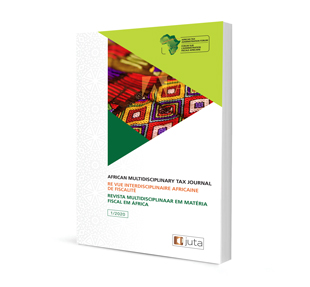
Source: African Multidisciplinary Tax Journal, 2022 Issue 1, p. 1-22
https://doi.org/10.47348/AMTJ/V2/i1a1

Share

Cite this article

Owens, J and Schlenther, B
Developments in the Use of Technologies in African Tax Administrations
African Multidisciplinary Tax Journal, 2022 Issue 1, p. 1-22
https://doi.org/10.47348/AMTJ/V2/i1a1

Abstract

A substantial number of sub-Saharan African tax administrations have seen efficiency gains by adopting online systems for tax filing and payment. However, the adoption of technology for the automation of tax administration has been markedly slow in comparison to the pace of adoption in developed countries. For African countries’ drive toward domestic resource mobilisation to be successful, automation of core processes is fundamental and the adoption of standards in international cooperation, improving data quality and promoting fiscal decentralisation. This article demonstrates that while much progress has been made in automation, Tax Administration Diagnostic Assessment Tool assessments still illustrate several gaps experienced by tax administrations in compliance risk management, statistical analysis, bulk data analysis, and the quality of data. As ref lected in stagnant tax gross domestic product ratios, without mitigating these risks and not seizing opportunities offered by instruments such as the exchange of information standards, advances made in automation run the risk of being nullified eventually. Therefore, African tax administrations need a digital roadmap and a set of metrics to measure their progress in automation.

Developments in the Use of Technologies in African Tax Administrations

Determinants of Properties Tax Revenues in Sub Saharan Africa: Case of Togo

Determinants of Properties Tax Revenues in Sub Saharan Africa: Case of Togo

Authors: Kodzo Senyo Adjeyi, Kokou Essegbe Amaglo and Tsotso Kouevi

ISSN: 2709-8575
Affiliations: Doctorant en sciences de gestion/FaSEG-Université de Lomé/Togo; Doctorant en sciences de gestion/FaSEG-Université de Lomé/Togo; Maître de conférences agrégé en sciences de gestion/FaSEG-Université de Lomé/Togo
Source: African Multidisciplinary Tax Journal, 2022 Issue 1, p. 23-41
https://doi.org/10.47348/AMTJ/V2/i1a2

Share

Cite this article

Adjeyi, KS, Amaglo, KE and Kouevi, T
Determinants of Properties Tax Revenues in Sub Saharan Africa: Case of Togo
African Multidisciplinary Tax Journal, 2022 Issue 1, p. 23-41
https://doi.org/10.47348/AMTJ/V2/i1a2

Abstract

The objective of this study is to identify the determinants of property tax revenues in Togo. The data relate to the regions and prefectures and were collected from the services of the Togolese Revenue Authority (OTR) and from the Ministry of Justice over a period of five years (2016 to 2020). The results of the descriptive analysis show that the maritime region especially the capital Lomé alone generates more than 98 per cent of property tax revenues. The linear regression revealed that digitisation and awareness efforts influence positively the level of revenue collection. However, land disputes are an obstacle to the success of reforms that can optimise the mobilisation of property tax revenues.

Property Taxation and Efficiency Scores of Metropolitan Municipalities in South Africa

Property Taxation and Efficiency Scores of Metropolitan Municipalities in South Africa

Author: Ada Jansen, Onesmo Kaiya Mackenzie and Wynnona Steyn

ISSN: 2709-8575
Affiliations: Associate professor in the Department of Economics at Stellenbosch University; PhD student in the Department of Economics at Stellenbosch University; Economist, Macroeconomic Research Unit at the South African Revenue Service
Source: African Multidisciplinary Tax Journal, 2022 Issue 1, p. 42-60
https://doi.org/10.47348/AMTJ/V2/i1a3

Abstract

Property taxation is a primary source of income for urban municipalities (metros), particularly in South Africa. Property tax collection amongst metros varies, which begs the question of whether differences in tax efficiency scores can be explained by institutional factors, or whether economic factors such as the size of the tax base or the ability to raise other revenues play a role. This article estimates property tax efficiency scores for eight South African metros and considers factors that affect these scores. We use municipal data and apply the data envelopment analysis method to estimate the efficiency scores for property taxation. This is followed by a Tobit regression to evaluate the determinants of these scores. The results show that although metros achieve relatively high efficiency scores, property tax collections can be improved. In addition, economic indicators explain variations in efficiency scores, but financial management remains key to delivering municipal infrastructure.