
Last resort or lasting harm? Examining pre-trial detention of children in conflict with the law in Kenya: Advocating for accountability in law enforcement
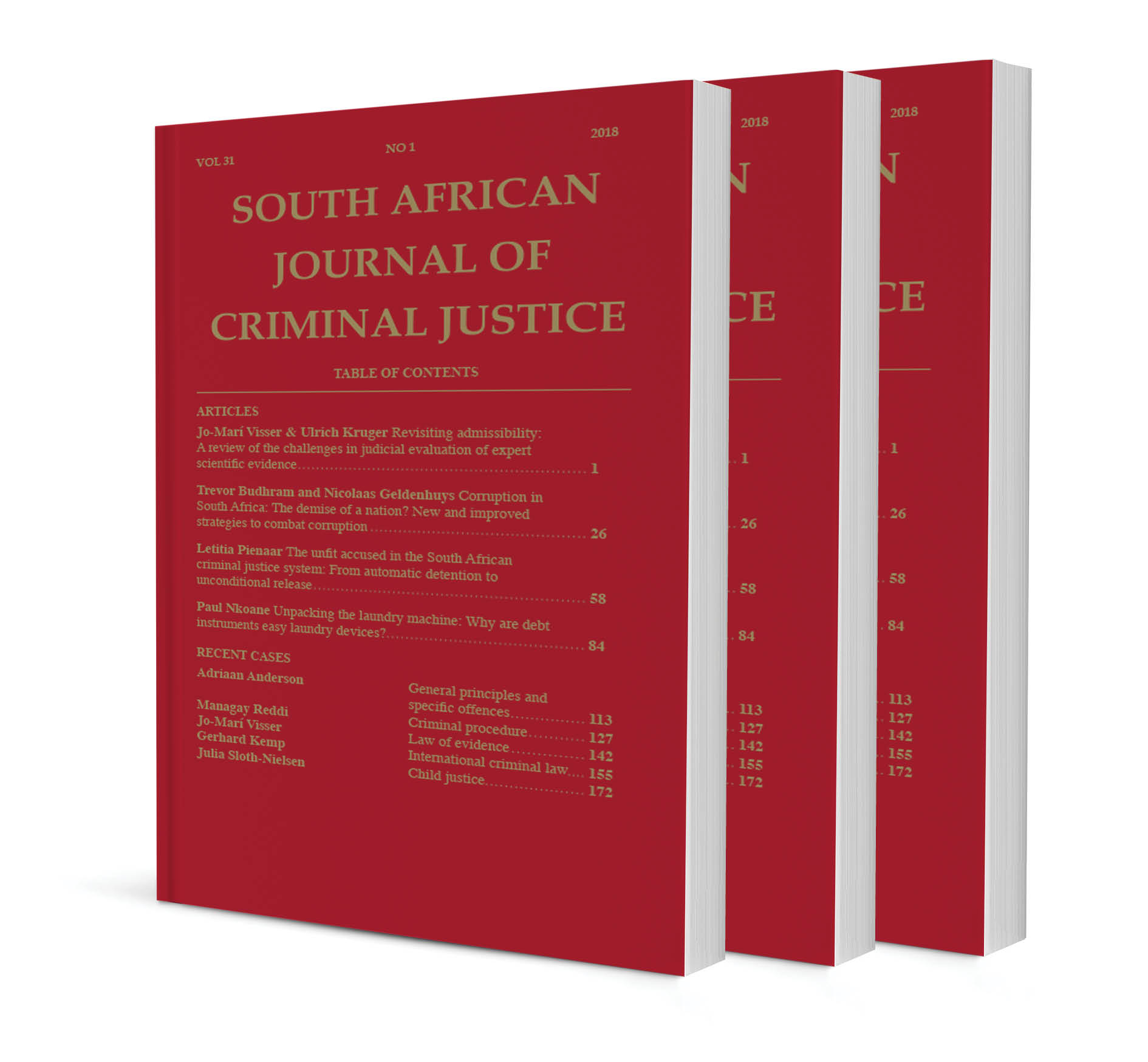
ARTICLE

Last resort or lasting harm? Examining pre-trial detention of children in conflict with the law in Kenya: Advocating for accountability in law enforcement

Author: Terry Moraa

ISSN: 1996-2118
Affiliations: LLB (Candidate) at Kabarak University, Kenya
Source: South African Journal of Criminal Justice, Volume 38 Issue 2, p. 189-216
https://doi.org/10.47348/SACJ/v38/i2a1

Abstract

This paper is driven by the desire of the global community to restrain children’s detention to when necessary. The paper addresses the ongoing problem of excessive and prolonged pre-trial detention of children in conflict with the law in Kenya, despite national and international legal standards advocating for detention only as a measure of last resort and for the shortest appropriate period of time. Detained for minor offences, like stealing chicken, some children wait up to six months in pre-trial detention often being exposed to violence, stigma and long-term developmental harm. Although the 2010 Kenyan Constitution marked a significant step forward in protecting children’s rights, implementation gaps persist. To interrogate this problem, the paper uses a qualitative legal analysis, drawing on legal instruments, policy documents and case studies to explore how existing laws are applied in practice. It evaluates the extent to which Kenya’s child justice framework aligns with international standards and identifies systemic obstacles within the justice system that undermine child rights protections. The paper finds that while Kenya has a strong legislative foundation for child justice, implementation remains weak. Key recommendations include enforcement of the law, a coordinated child justice system and establishing accountability mechanisms for justice system actors who fail to uphold child protection standards. The study underscores the urgent need to reform the justice system by restoring a coordinated, child-centred approach.

Previous consistent statements in sexual offences in South Africa: Interpreting sections 58-60 of the Criminal Law (Sexual Offences and Related Matters) Amendment Act through their drafting history and relevant case law

ARTICLE

Previous consistent statements in sexual offences in South Africa: Interpreting sections 58-60 of the Criminal Law (Sexual Offences and Related Matters) Amendment Act through their drafting history and relevant case law

Author: Jamil Ddamulira Mujuzi

ISSN: 1996-2118
Affiliations: LLB (Makerere) LLM (UP) LLM (UFS) LLD (UWC), Professor of Law, Faculty of Law, University of the Western Cape
Source: South African Journal of Criminal Justice, Volume 38 Issue 2, p. 217-244
https://doi.org/10.47348/SACJ/v38/i2a2

Abstract

Section 58 of the Criminal Law (Sexual Offences and Related Matters) Amendment Act requires courts to admit previous consistent statements relating to sexual offences. However, it does not explain the purpose for which those statements should be admitted. Section 59 prohibits courts from drawing an inference from the victim’s delay in reporting a sexual offence. Section 60 abolishes the cautionary rule in cases of sexual offences. Academics and courts have disagreed on the probative value of previous consistent statements. Relying on the drafting history of section 58, the author argues that a previous consistent statement can be admitted to corroborate the complainant’s evidence. The author also argues that there are circumstances in which a previous consistent statement is inadmissible; there are instances in which a court can draw a negative inference from the delay in reporting the sexual offence; and that although the cautionary rule was abolished with regard to sexual offences, courts are still required to treat with caution the evidence of victims of sexual offences who are children or single witnesses.

Sex+Lies+HIV=Rape? Understanding deceptive sex in light of S v Conga

ARTICLE

Sex+Lies+HIV=Rape? Understanding deceptive sex in light of S v Conga

Author: Mary Nel

ISSN: 1996-2118
Affiliations: BA(Law) LLB LLM LLD (Stell) MPhil (Criminology) (Cantab); Senior lecturer, Department of Public Law, Faculty of Law, Stellenbosch University
Source: South African Journal of Criminal Justice, Volume 38 Issue 2, p. 245-269
https://doi.org/10.47348/SACJ/v38/i2a3

Abstract

On 25 September 2024 Leon Santos Conga, who infected his former partner with HIV, was sentenced to life imprisonment for rape and attempted murder by the Pretoria Magistrate’s Court. The basis for the rape conviction was that he deceived his partner into believing that he was HIV-negative, and she would not have had sex with him had she been aware of his HIV-positive status. This is the first HIV-related conviction for rape ‘committed under false pretences or by fraudulent means’ in terms of section 1(3)(c) of SORMA. Using the Conga judgment as a point of departure, this contribution critically examines the current South African legal position on deceptive sex, including the rationale for criminalising deceptive sex as rape, and each element of the crime as affected by HIV-related deception in particular. It concludes that while the Conga ruling may be a legally correct expansion of the application of section 1(3)(c) in principle, there are persuasive policy reasons for not following its approach in future owing to the wider societal cost of criminalising HIV-related deception as rape, including exacerbating stigma against HIV-positive individuals and negative public health ramifications.