
The Prosecutor v Dominic Ongwen case before the International Criminal Court: A Twail-er’s perspective
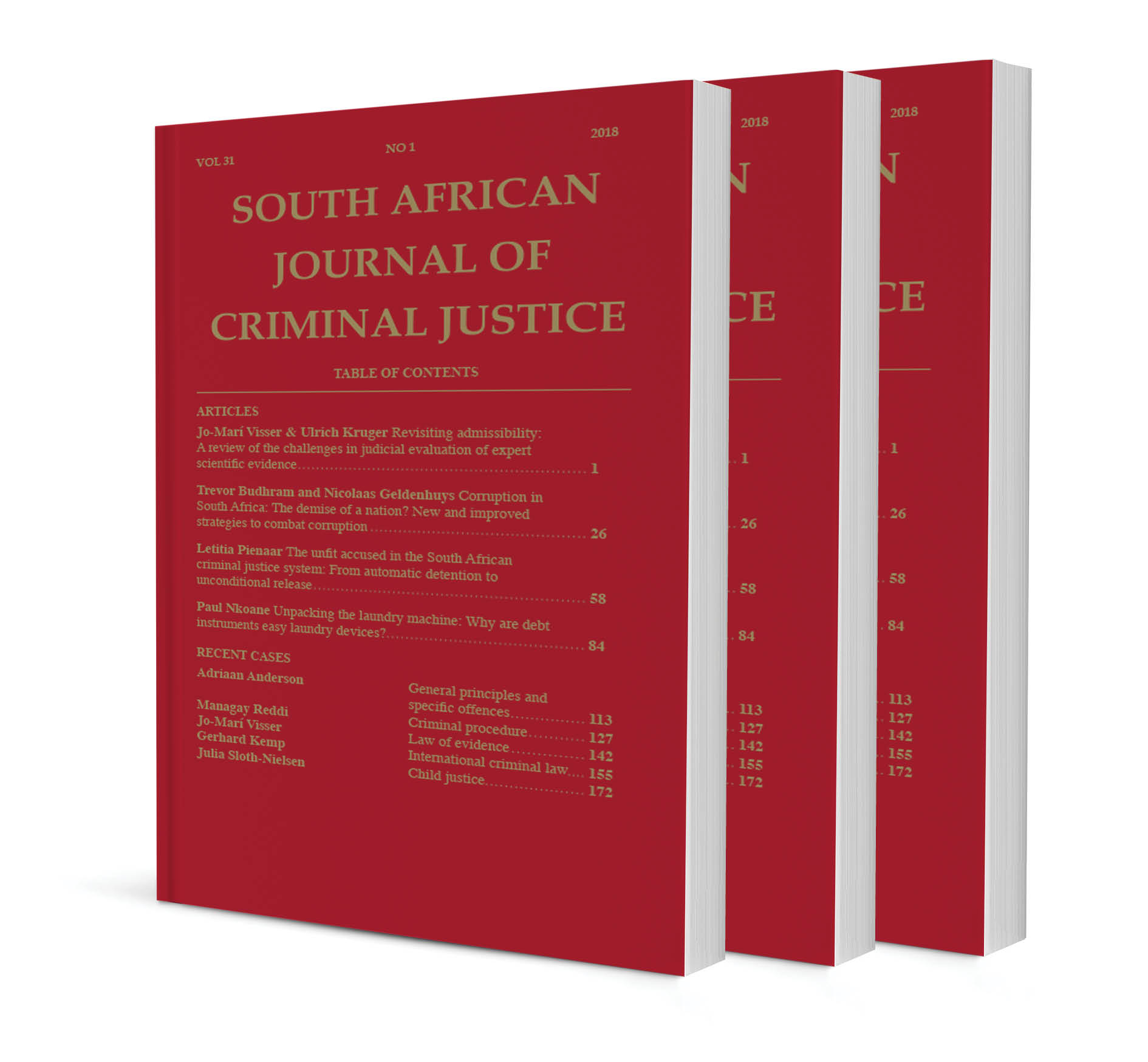
The Prosecutor v Dominic Ongwen case before the International Criminal Court: A Twail-er’s perspective

Author: Linda Mushoriwa

ISSN: 1996-2118
Affiliations: LLB (University of Zimbabwe) LLM (Unisa) PhD (University of KwaZulu-Natal); Researcher, African Centre for Transnational Criminal Justice, University of the Western Cape
Source: South African Journal of Criminal Justice, Volume 37 Issue 1, p. 103 – 126
https://doi.org/10.47348/SACJ/v37/i1a5

Abstract

This paper explores whether the International Criminal Court (ICC or ‘the court’) has lived up to the expectation of being an effective and universal mechanism of international criminal justice and accountability, by using the judgment of the Prosecutor v Dominic Ongwen as a case study. Ongwen was convicted by the court’s Trial Chamber (TC) IX in February 2021, on 61 charges of war crimes and crimes against humanity perpetrated in Northern Uganda between July 2002 and December 2005, and sentenced to 25 years’ imprisonment. The Appeals Chamber (AC) confirmed both the conviction and sentence in a judgment rendered on 15 December 2022. It will be argued from a Third World approaches to international law (TWAIL) perspective, that the court missed an opportunity to improve its institutional legitimacy, considering the legitimacy deficit stemming from claims by African states that the ICC is biased against Africa. The paper will also argue that the court missed an opportunity to improve its own decision-making by expanding its source material to include sources from the Global South.

Examining the value of criminologists’ skills in the context of sentencing objectives: Perspectives from presiding officers in Bloemfontein, Free State Province

Examining the value of criminologists’ skills in the context of sentencing objectives: Perspectives from presiding officers in Bloemfontein, Free State Province

Author: Kelebogile Boleu

ISSN: 1996-2118
Affiliations: MA (Criminology) (UFS); Junior Lecturer, Faculty of the Humanities, University of the Free State
Source: South African Journal of Criminal Justice, Volume 36 Issue 3, p. 363 – 378
https://doi.org/10.47348/SACJ/v36/i3a1

Abstract

The role of criminologists in South Africa and many other countries has been evolving and expanding over the years. Criminologists are increasingly involved in various phases of the judicial process, including the pre-trial, trial, and post-trial stages.1 As a scientific discipline, criminology involves understanding the root causes of crime, its impact on society, and how to prevent and respond to criminal behaviour. However, it stands to reason that in making an informed and balanced contribution to a case in a court of law, the criminologist must familiarise themself with all aspects relevant to the case.2 The current study focused on the perception of presiding officers about criminologists as expert witnesses in their courts during sentencing. This study explored whether presiding officers valued criminologists knowing, understanding and applying sentencing objectives in writing their reports. A qualitative inquiry was conducted to explore whether it is important for a criminologist to understand sentencing objectives in order to provide an overall and thorough report to the court. Semi-structured interviews were conducted with presiding officers from the regional and high courts in Bloemfontein. The findings suggest that presiding officers prefer to appoint a criminologist who understands and has broad experience of all sentencing objectives in South Africa to assist them in deciding on appropriate sentences.

Measuring progress and plugging gaps: Towards a child-friendly criminal justice system in Zimbabwe

Measuring progress and plugging gaps: Towards a child-friendly criminal justice system in Zimbabwe

Author: Admark Moyo

ISSN: 1996-2118
Affiliations: LLB (UFH) LLM PhD (UCT); Senior Lecturer, Department of Private Law, Stellenbosch University
Source: South African Journal of Criminal Justice, Volume 36 Issue 3, p. 379 – 405
https://doi.org/10.47348/SACJ/v36/i3a2

Abstract

This article takes stock of the progress made and challenges confronted by Zimbabwe in domesticating international child justice standards relating to general principles of children’s rights, the minimum age of criminal responsibility, and pre-trial detention. It demonstrates that the country has largely incorporated general principles of children’s rights and their implications for child justice norms, standards and practices at the domestic level. In addition, the article posits that the legislature should raise the minimum age of criminal responsibility to at least 14 years to harmonise domestic law with regional and international child law. In the context of pre-trial detention, it is argued that the constitutionalisation of the twin principles of detention as a measure of last resort and for the shortest appropriate period are designed to ensure that an alleged child offender is solely detained if there are no less restrictive means for securing the child’s attendance during trial proceedings. It is also shown that pre-diversion assessments of child offenders enable key players in the justice system to craft individualised, evidence-based interventions that respond to the treatment needs of each child offender. Finally, the article reiterates that the state should urgently enact the Child Justice Bill, allocate more resources, and build relevant infrastructure for pre-trial, child-friendly justice to become a reality.