
How did we get here? Reflections on the UDHR and South Africans with albinism

How did we get here? Reflections on the UDHR and South Africans with albinism
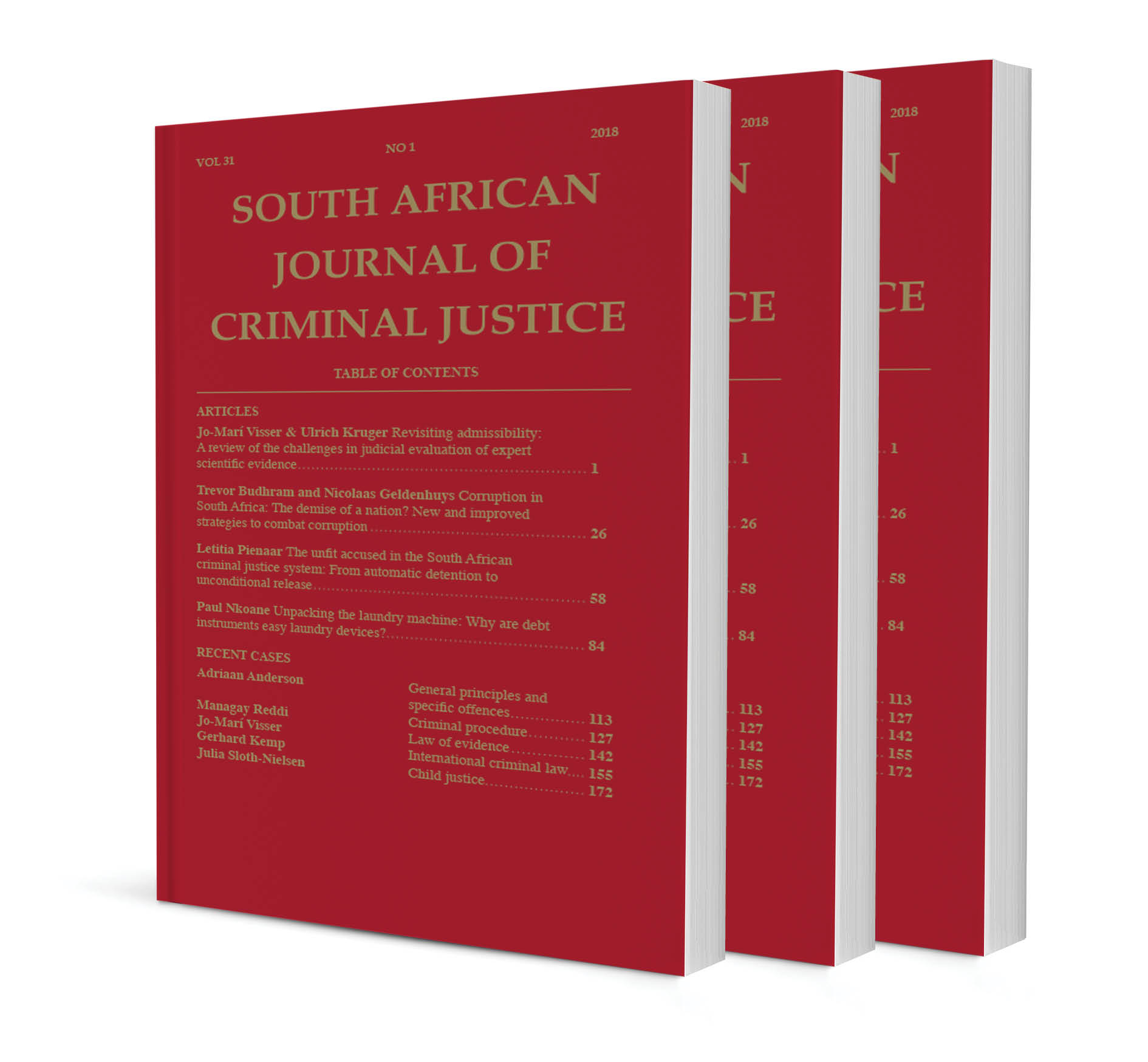
Authors Bright Nkrumah

ISSN: 1996-2118 Affiliations: BA(Hons) Ghana, Mphil Dphil (Pret), Research Fellow, School of Social Sciences, University of KwaZulu Natal. Source: South African Journal of Criminal Justice, Volume 32 Issue 2, p. 181 – 201

Abstract

In recent times, South Africa continues to witness persecution and targeted attacks on persons living with albinism. Although this group is protected under (inter)national laws, they continue to be the main casualties of ritual killings. The year 2018 marked the 70th anniversary of the Universal Declaration of Human Rights (UDHR). This instrument sets out overarching provisions for the protection of women, children and men with this condition from all forms of abuse. From a (quasi)normative perspective, it is undeniable that the UDHR has had and continues to have a great impact on South Africans with albinism (SAwA). It is, however, evident that SAwA are yet to enjoy the benefits of the UDHR since their persecution remains. Through a comparative analysis, the paper recommends that the state should adopt a proactive step to forestall violent attacks against SAwA.

Regional court magistrates’ recommendations for improving the efficacy of taking statements from children

Regional court magistrates’ recommendations for improving the efficacy of taking statements from children

Authors Hendrik Lochner & Juanida Horne

ISSN: 1996-2118 Affiliations: NDip (Pol) (Technikon SA) NDip (Security Management) (Technikon SA) BTech (Policing) BTech (Security Management) MTech (Forensic Investigation) DLitt et Phil (Unisa); Senior Lecturer, Department of Police Practice, Unisa; NDip (Pol) (Technikon SA) BTech (Policing) MTech (Forensic Investigation) DLitt et Phil (Unisa); Senior Lecturer, Department of Police Practice, Unisa Source: South African Journal of Criminal Justice, Volume 32 Issue 2, p. 202 – 222

Abstract

National Instruction 3/20081 of the South African Police Service recognises the fact that taking children’s statements (irrespective of whether they are victims of, or witnesses to, a crime) is a challenge requiring special skills. There are thus well-documented instructions, guidelines and prescriptions for taking written statements from children who are victims of crime. The purpose of the research on which this article is based was to indicate, from the point of view of a criminal investigator, crucial aspects that are not covered in the Standing Orders2 of the South African Police Service or National Instruction 3/2008, and to support these with empirical evidence and references from the literature. Taking a witness statement from a child does not happen in a vacuum, and the investigating officer who performs this task is central to the investigation of the reported case and its successful prosecution. In this article, the authors examine and report on the requisite skills, make recommendations and identify aspects which regional court magistrates consider when evaluating children’s evidence based on their witness statements.

Criminal Procedure

Criminal Procedure

Authors Pieter Du Toit

ISSN: 1996-2118 Affiliations: North-West University Source: South African Journal of Criminal Justice, Volume 32 Issue 2, p. 233 – 244

Cases

Search and seizure

Validity of a search warrant

Trial without unreasonable delay

Judicial conduct

Law of Evidence

Law of Evidence

Authors Lirieka Meintjes-Van Der Walt

ISSN: 1996-2118
Affiliations: University of Fort Hare
Source: South African Journal of Criminal Justice, Volume 32 Issue 2, p. 245 – 265

Cases

Admonition to speak truth

Single child witness and identification evidence

Probative value of and risks associated with gunshot

primer residue expert evidence

Prosecution’s duty to disclose expert evidence

Assessment of expert firearm identification

The right of the accused not to testify