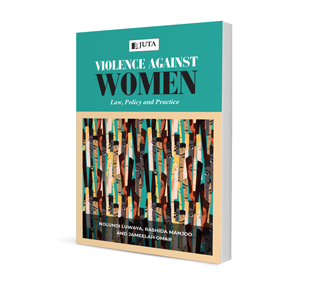
Working against violence against women: How far have we come?

Working against violence against women: How far have we come?

Authors Nolundi Luwaya and Jameelah Omar

ISSN: 1996-2088
Affiliations: BA LLB LLM (UCT); Director, Land and Accountability Research Unit, University of Cape Town; LLB LLM (UCT); Senior Lecturer, Department of Public Law, University of Cape Town
Source: Acta Juridica, 2020, p. 1 – 26

Abstract

This article is the framing chapter of this collection of articles. It discusses violence against women through the lens of the three main themes that also run through the collection. The first theme focuses on sexual violence as a particular manifestation of violence against women. The second theme includes a discussion of legal and policy discourses of violence in international and regional law, as well as the challenges faced by women at the margins of society. The final theme addresses the difficulties for women who work against violence against women, whether as scholars or practitioners, and considers the toll and costs associated with doing this work. The discussion of these themes is used to both acknowledge the systematic nature of these challenges and to problematise the challenges, by reflecting on the repeated violences, acknowledging new(er) manifestations, and asking probing questions about how trends in public outrage can impact on legal, policy and practice developments.

Villains and (s)heroes in the quest for truth and justice in sexual harassment cases

Villains and (s)heroes in the quest for truth and justice in sexual harassment cases

Author Nicolette Naylor

ISSN: 1996-2088
Affiliations: BProc LLB (University of the Western Cape), LLM International Human Rights (University of London).
Source: Acta Juridica, 2020, p. 27 – 62

Abstract

Sexual harassment is rooted in structures and patterns of patriarchy, power and discrimination. The law requires employers to address the root causes of sexual harassment to prevent and protect all employees. When the law intervenes to remedy sexual harassment, the disciplinary rules and procedures set out in the law of sexual harassment can victimise or vindicate both complainants and perpetrators. The law can also legitimise toxic workplace cultures when it directs all its focus on individual perpetrators and complainants, as opposed to interrogating broader organisational cultures that may create a toxic environment in which sexual harassment can thrive. This article explores the limitations of the individualised, adversarial approach to discipline and offers guidance for reimagining what justice and accountability could look like in cases of sexual harassment, through an analysis of the Equal Education sexual harassment inquiry process and outcome.

Tribunal justice may be meaning ful to lawyers drafting legal documents … amid the smoldering embers of destroyed communities. But little satisfaction will come to survivors … the voices of survivors will remain largely unheard and unaddressed.